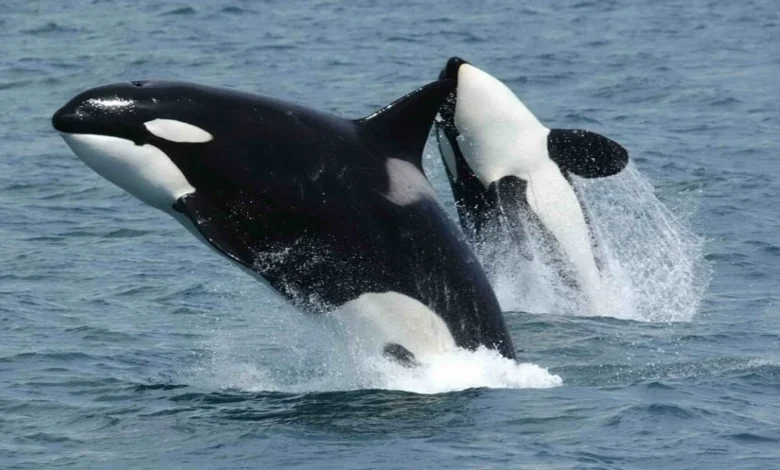
The recent emergence of extraordinary footage from the Gulf of California is shedding new light on the complex social dynamics and sophisticated hunting strategies of orcas, commonly known as killer whales. In a series of observed events, these apex predators have been documented employing a highly unusual tactic: ramming the carcasses of large sunfish with such immense force that the bodies fragment into numerous pieces. This behavior, captured and detailed in a recent publication in the journal Frontiers in Ethology, suggests a departure from traditional orca hunting methods and has prompted scientific inquiry into its purpose, ranging from enhanced feeding efficiency to elements of play and social learning.
The phenomenon adds another layer to the ongoing scientific fascination with orca behavior, particularly in light of numerous anecdotal and documented instances in recent years where orcas have been observed aggressively interacting with vessels, sometimes leading to their sinking. While the motivations behind boat-ramming incidents remain a subject of intense research, with leading theories pointing towards culturally transmitted behaviors passed down through generations, this new discovery focuses on inter-species predation. The forceful fragmentation of sunfish carcasses represents a distinct behavioral pattern, moving beyond the typical methods of dismemberment and consumption.
Dr. Kathryn Ayres, a co-author of the study from Beneath The Waves, a nonprofit organization dedicated to ocean health, commented on the potential drivers behind this behavior. "We think this may help younger orcas feed more easily, or it could also just be for fun," Ayres stated in a press release. "Orcas are known for playing with their food." This dual interpretation highlights the multifaceted nature of orca intelligence and social structures, where practical survival needs can intertwine with complex social interactions and potentially even recreational activities.
A Chronicle of Unexpected Aggression: The Sunfish Fragmentation Event
The initial documented instance of this peculiar hunting strategy occurred in July 2024 off the coast of San Jose del Cabo, Mexico. A tourism operator, presumably accustomed to observing marine wildlife, captured remarkable video footage of a pod of orcas engaged in this unique predatory behavior. The pod consisted of three adult female orcas, one male, and one juvenile. Their initial activity involved the successful capture and consumption of a spine-tail devil ray. It was in the immediate aftermath of this successful hunt that the more unusual event unfolded.
The same tourism operator subsequently filmed one of the adult female orcas holding a sunfish carcass in her mouth. The sunfish displayed a significant lateral wound, indicating that its internal organs, or viscera, had likely already been extracted, a common step in orca predation. It was at this point that the male orca initiated a powerful charge towards the sunfish carcass. The female orca strategically released her grip on the prey just moments before the collision. The impact was reportedly audible, accompanied by the dramatic fragmentation of the sunfish carcass. The scattered pieces of flesh dispersed into the surrounding water. In the immediate aftermath, the juvenile orca was observed actively feeding on the smaller fragments, while the adult orcas continued to consume the larger portions of the now-split-open body.
This detailed sequence of events, meticulously recorded and analyzed, provides compelling evidence of a deliberate and coordinated action by the orcas. The act of releasing the carcass just prior to impact suggests a level of control and foresight, rather than a haphazard collision. The subsequent consumption of the fragmented pieces by the juvenile, in particular, lends credence to the hypothesis that this method may facilitate easier feeding for younger or less experienced members of the pod.
Beyond the Sunfish: A Pattern of Cooperative and Forceful Predation
The observed behavior with the sunfish is not an isolated incident of orcas employing forceful tactics in their hunting repertoire. Scientific literature and observational records have long documented the remarkable cooperative hunting strategies of orcas. These strategies often involve striking, cornering, or killing prey animals, with the outcome sometimes being consumption and at other times seemingly not. This duality suggests that such actions can serve multiple purposes beyond mere sustenance.
Indeed, orca predatory behaviors can be broadly categorized as social interactions, play, or practice, all of which contribute to social learning within the pod. For instance, orcas have been documented ramming whale sharks, a considerably larger and more formidable prey, while another orca simultaneously held the prey steady. This coordinated effort showcases advanced communication and tactical execution within the pod.
Other examples of their sophisticated cooperative strategies include:
- Herding Mobile Rays: Orcas effectively maneuver schools of rays, directing them towards a vulnerable position for capture.
- Blocking Escape Paths: When hunting formidable prey like white sharks, orcas have been observed strategically positioning themselves to prevent the prey’s escape, effectively cornering them.
- Wave Production for Penguin Predation: In a particularly ingenious display of ecological adaptation, orcas have been observed deliberately creating waves to dislodge penguins from ice floes, making them easier to catch.
These diverse tactics underscore the remarkable cognitive abilities and adaptability of orcas, demonstrating their capacity for complex problem-solving and coordinated action in varied ecological niches.
Deconstructing the Sunfish Hunting Strategy: Evolution of a Tactic?
The typical orca hunting strategy for species like the sunfish, prior to this newly observed behavior, is generally understood to involve a three-pronged approach. Initially, an orca would target the pectoral fins of the sunfish, likely to immobilize it or reduce its maneuverability. Following this, the orca would employ its powerful jaws to slash across the sunfish’s body, specifically aiming to remove the viscera. The final stage typically involved using their beaks to access and consume the remaining flesh.
The newly documented "ram-to-fragment" behavior could represent a significant evolution or refinement of this basic strategy. By ramming the carcass with extreme force, the orcas effectively bypass some of the more time-consuming and potentially dangerous steps of dismemberment. The explosive fragmentation would not only break the sunfish into more manageable pieces but also potentially expose internal tissues more readily, simplifying the subsequent consumption process. This could be particularly advantageous when dealing with the dense flesh and large size of sunfish, which can weigh over 2,000 pounds (900 kilograms) and measure more than 10 feet (3 meters) in diameter. The ocean sunfish (Mola mola) is the heaviest known bony fish in the world, making its capture and processing a significant undertaking.
Implications for Understanding Orca Cognition and Social Learning
The observation of this novel hunting technique has significant implications for our understanding of orca cognition, social learning, and cultural transmission. The fact that this behavior was observed with multiple individuals, including a juvenile, suggests that it is likely a learned behavior being passed down within the pod. The "play" hypothesis, while seemingly anthropomorphic, is supported by extensive research into cetacean intelligence, which indicates a capacity for complex social interactions that extend beyond basic survival needs.
The breakdown of prey into smaller fragments could indeed make feeding more efficient, especially for younger orcas who may lack the strength or experience to tackle a whole carcass. This could contribute to higher survival rates among juveniles. Alternatively, the sheer force and spectacle of the fragmentation could be intrinsically rewarding for the orcas, a form of social bonding or even a demonstration of prowess.
The study’s authors emphasize the need for further research to fully comprehend the motivations and implications of this behavior. Future observations will be crucial in determining how widespread this "ram-to-fragment" technique is among different orca populations and whether it is being actively taught and learned by successive generations.
Broader Context: Orca Behavior and Human Interaction
This discovery also comes at a time when human attention is increasingly focused on orca behavior due to the persistent and sometimes concerning interactions between orcas and boats. The repetitive nature of these boat-ramming incidents, particularly along the Iberian Peninsula, has led many scientists to believe that these are not isolated aggressive acts but rather socially learned behaviors. This new finding, while distinct from boat interactions, reinforces the idea that orcas possess complex cultural traditions and that their behaviors can evolve and spread within populations.
The implications for marine conservation and human coexistence are significant. Understanding the motivations behind both predatory behaviors and interactions with human vessels is crucial for developing effective strategies to minimize conflict and ensure the well-being of both marine life and human activities at sea. As our understanding of orca intelligence and social structures deepens, it underscores the importance of respectful coexistence and continued scientific investigation into the lives of these magnificent creatures. The fragmented remains of a sunfish in the Gulf of California may seem like a simple predatory event, but they offer a profound glimpse into the intricate and ever-evolving world of the ocean’s most intelligent predators.